
FlowCon 2026: Highlights
Some themes I want to keep working through
A few themes from FlowCon 2026 stayed with me and belong together more than they first appear.
If you’re looking for my own FlowCon contribution, you can find it in Org Topologies from the trenches.
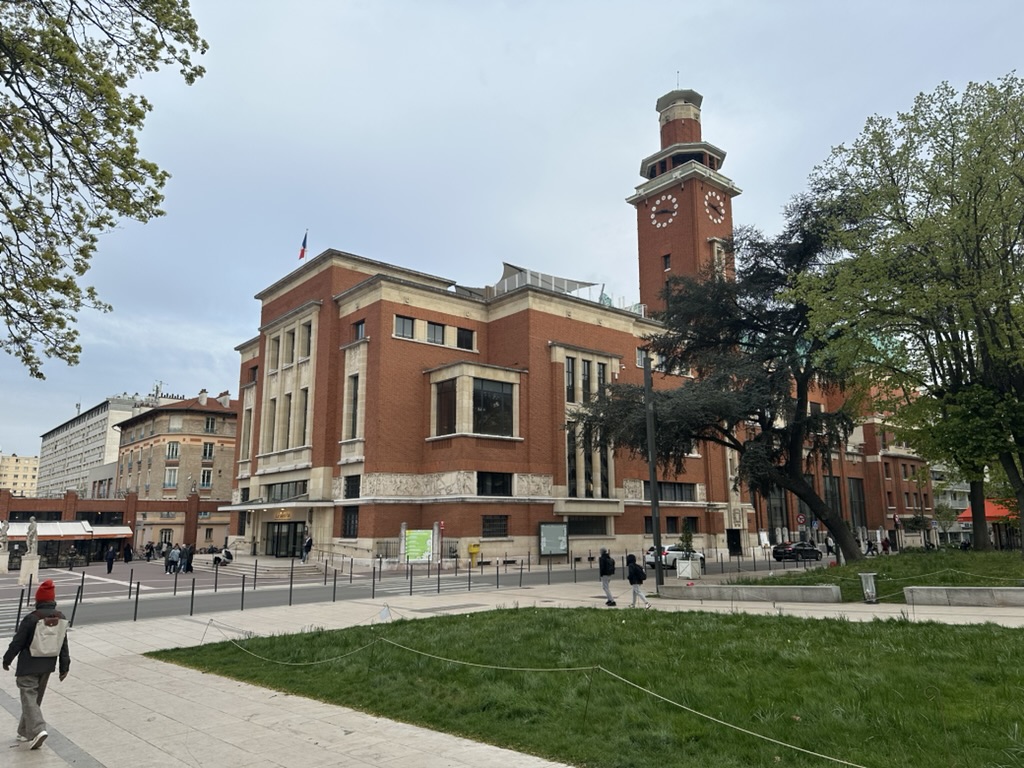
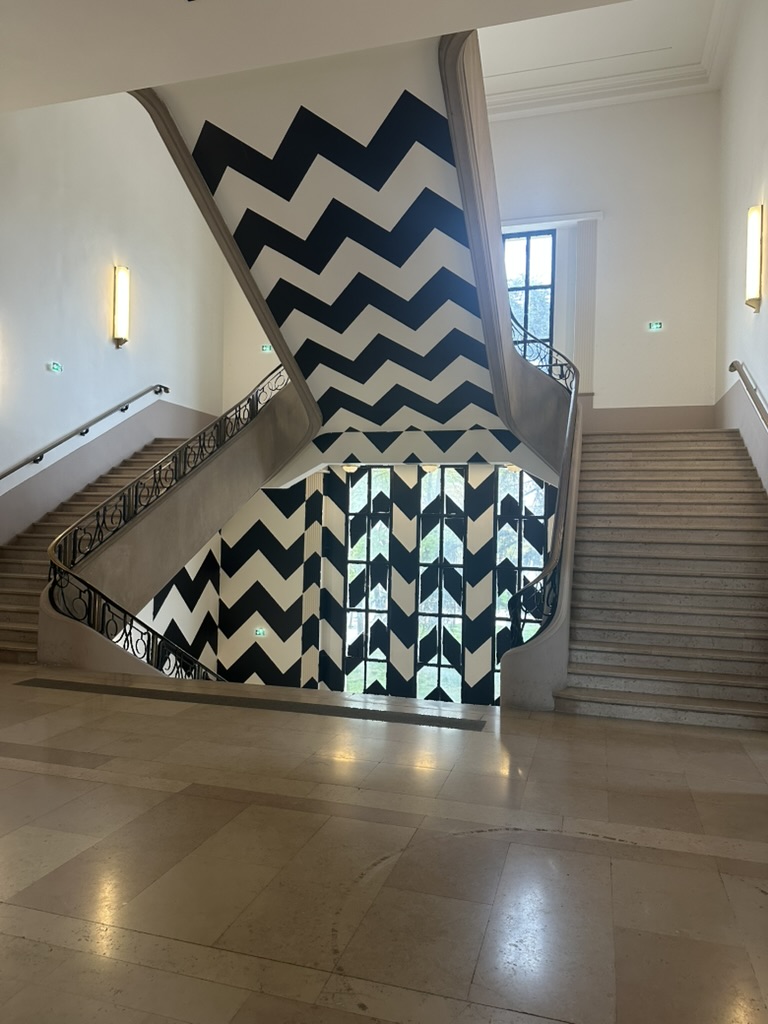
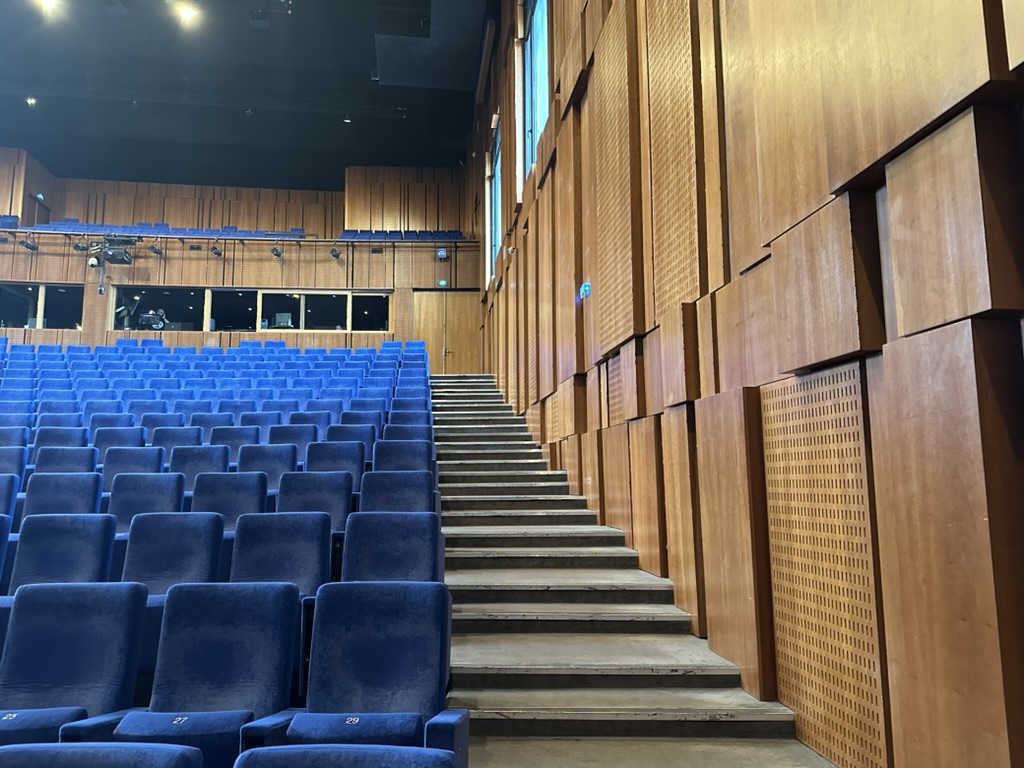
- AI was everywhere, and Chris Matts captured the part that matters
- Wardley Maps kept showing up, and that was good to see
- Xin Yao and Simon Rohrer belong in the same thread
- Andrea Provaglio and disruption
- Pierre Masai and Jidoka
- Smaller items, shorter queues
- What stayed with me
AI was everywhere, and Chris Matts captured the part that matters
AI was on everyone’s mind. That wasn’t surprising. What stood out to me much more was how people talked about it.
Chris Matts’ keynote, First kill all the Thought Leaders, gave me a quote that feels highly relevant to the current moment: AI is a tool without context and without purpose.
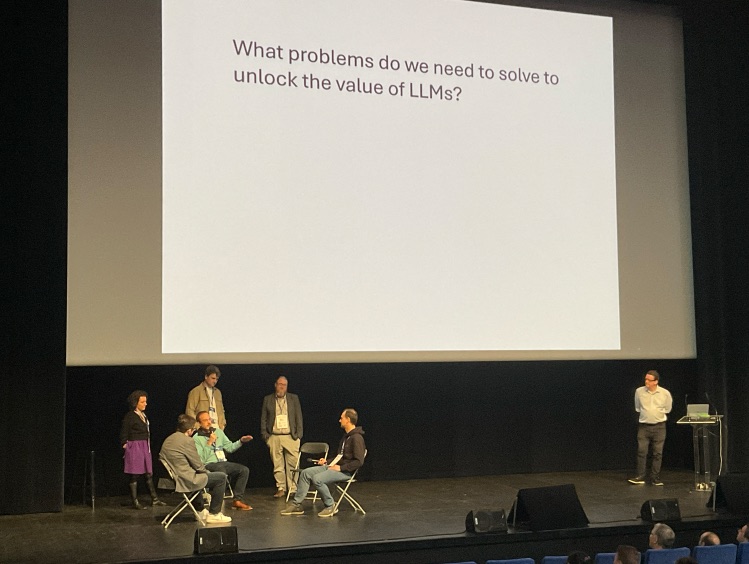
That also means AI isn’t just another product category we can shop for and install. If anything, it’s a moving design space that forces us to think more carefully about context, learning, and judgement.
I liked that Chris didn’t present this as a simple adoption problem. The talk pushed more toward sensemaking, community learning, and leadership responsibility than toward easy answers. That felt much closer to reality.
Wardley Maps kept showing up, and that was good to see
Speaking of sensemaking, Wardley Maps were very present across the conference. I was happy to see that, because this is exactly the point Andrey Adamovich was trying to make: used well, they can dramatically improve the quality of a strategic conversation.
Andrey’s talk on strategic PlatformOps with Wardley Maps had useful examples, but the broader point matters more to me than any individual map. This is a facilitation tool. It helps surface assumptions, make inertia visible, and structure a discussion that many companies are simply not having.
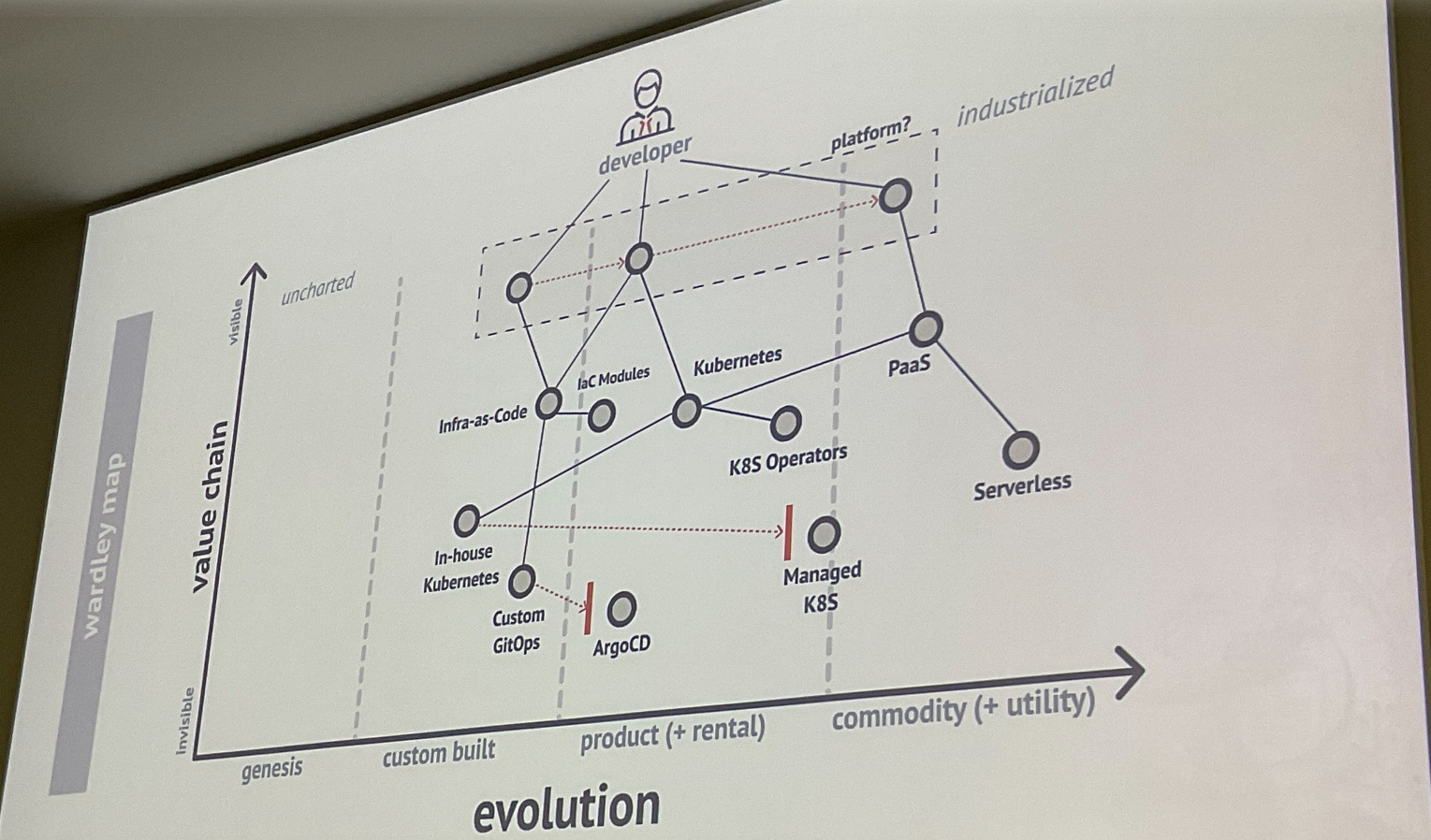
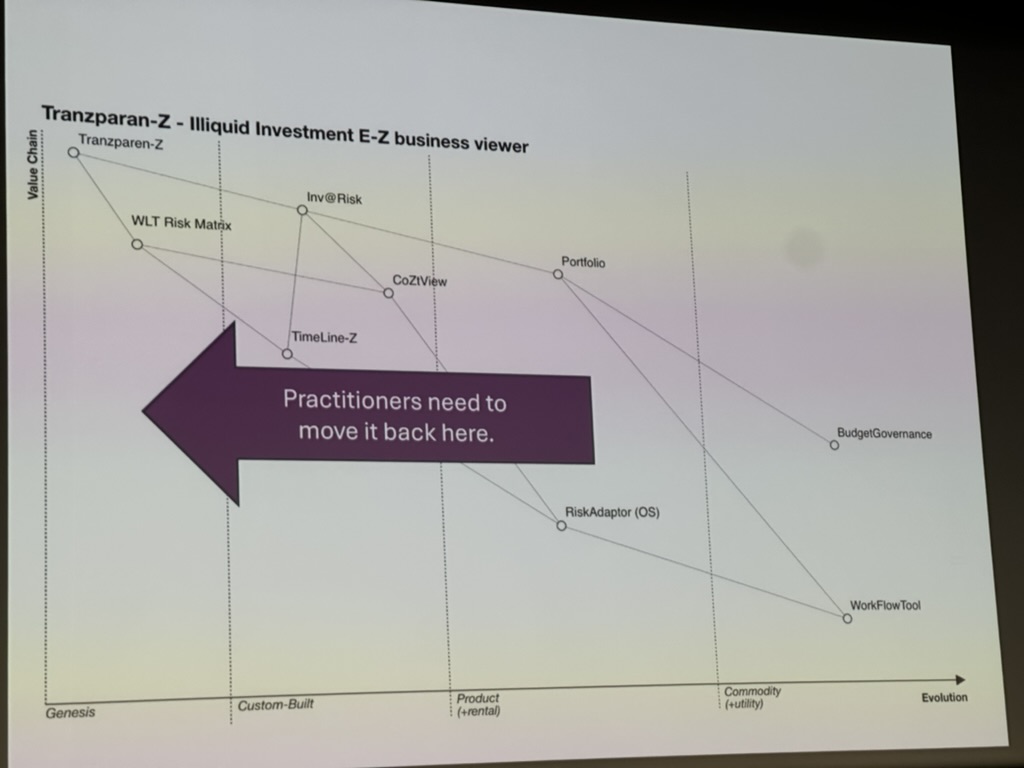
What made this feel so relevant to me is that AI is increasing the pace. It’s pushing us to make room again, which means we also need to revisit past decisions about what we build for ourselves and what we don’t. Maybe some of those conversations would have happened anyway, but AI is making them more urgent.
It might sound technical at first, but Product Managers and Product Owners need to be aware of this too if they want to keep their products healthy and make sure time investments go to the right things.
That is also what made me think of the Ecocycle Planning exercise from Liberating Structures. The exercise works more at the level of processes and actions, but the reminder carries over: revisiting old decisions matters there too, and we need to keep making room instead of only adding more.
Xin Yao and Simon Rohrer belong in the same thread
It was good to hear more than one talk go deeper than the familiar idea that architecture can be defined upfront and then matched with org design. In the past I’ve also been very vocal about this myself: Conway’s law, and especially the guidance in the original paper, meant something completely different from the way the inverse Conway maneuver is often used today.
Conway’s conclusion still matters: design managers should be rewarded for keeping their organizations lean and flexible, and system design management should not assume that adding more people automatically increases productivity.
One very good point by Simon Rohrer is that good architecture is the result of continuous conversation. That touches very closely to much of the org design work I’m doing myself: creating the time and space for people to have those conversations, and then, as a leader, getting out of the way when I’m not needed.
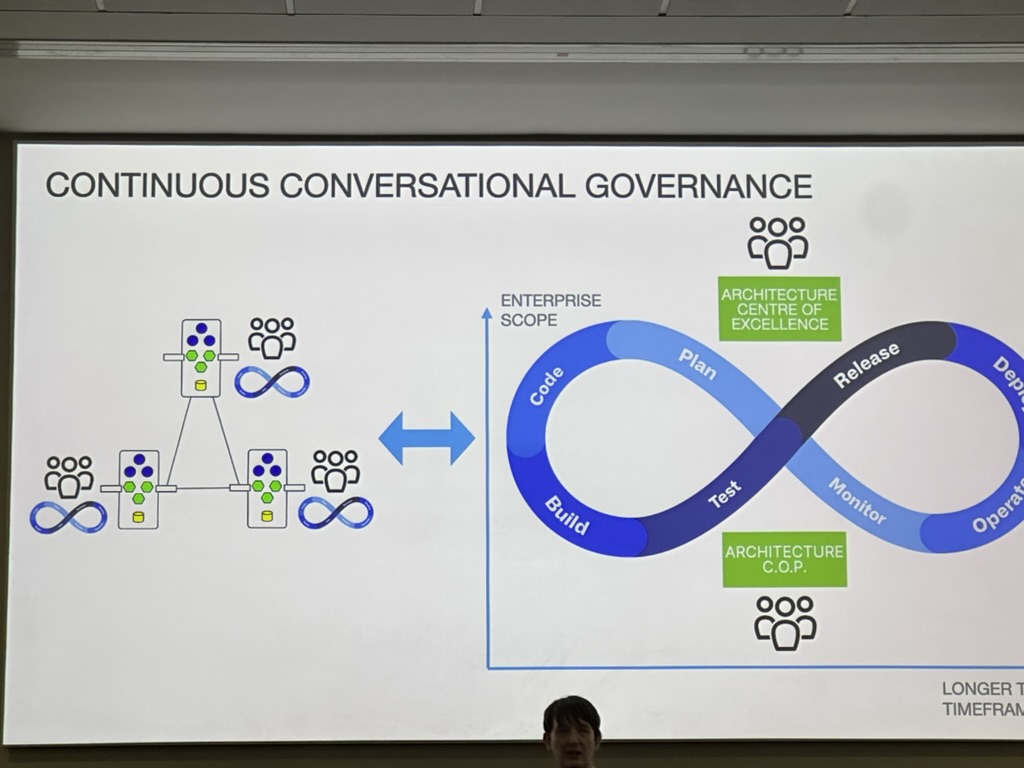
It was also very nice to see the same thread in Xin’s talk. Her distinction between delivery flow and generative flow gets at exactly why this matters. I wrote down that when the work becomes invisible, conversations become Gemba.
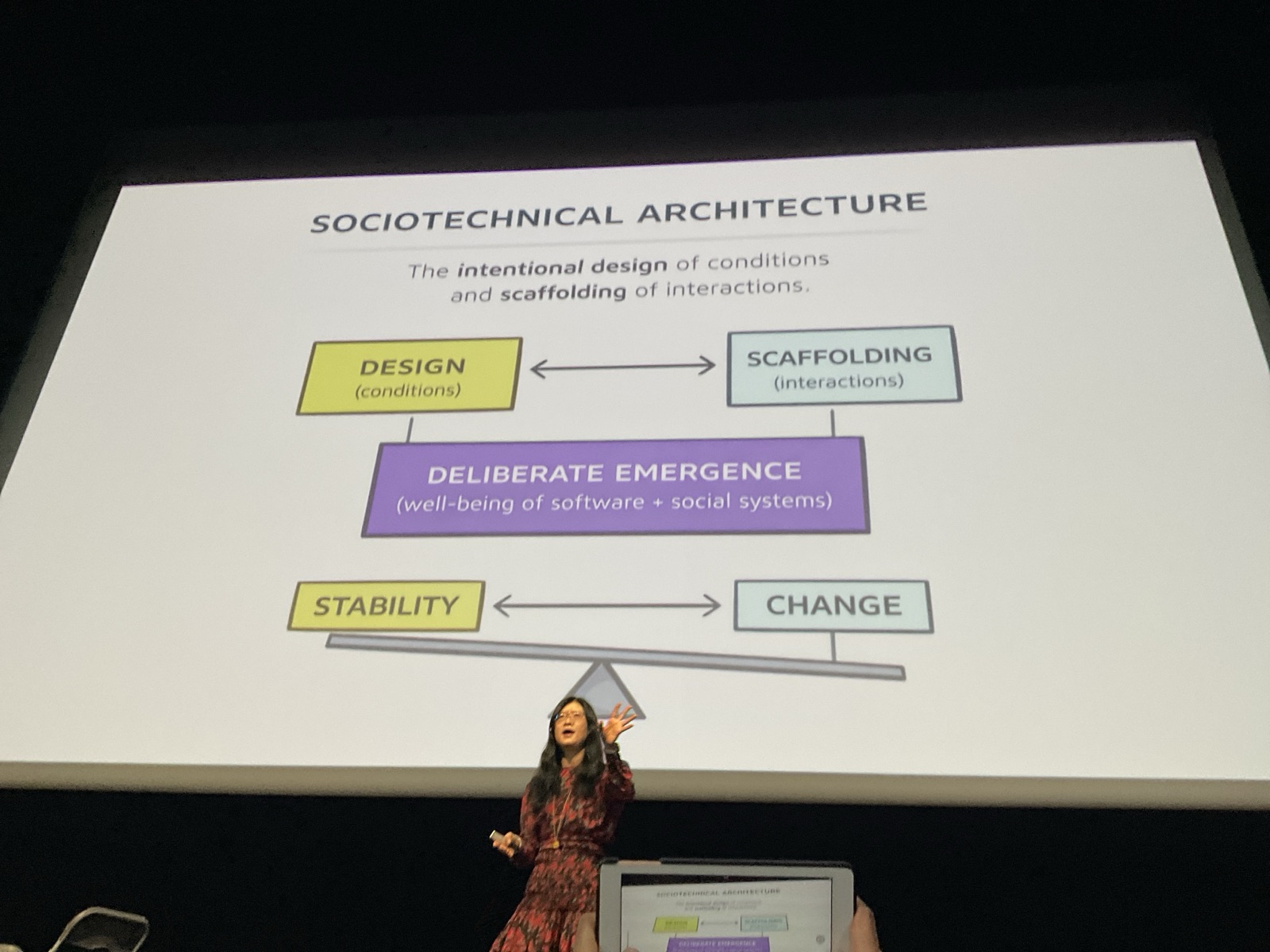
I’m also noticing that a lot of the concepts around Sociotechnical Architecture, and around autopoietic and allopoietic systems, are still new to me, but they come very close to how I already think about org design. So I’m looking forward to diving deeper into that world, and also into how it connects to cybernetics.
Andrea Provaglio and disruption
It was useful to see someone start from older literature like the threat-rigidity effect and tie it back to these times. It also reminded me of a longer essay that I’ve been working on for a while, and then kind of got sidetracked on.
But what was probably most striking to me wasn’t just the theory. It was the responses to some of the questions Andrea asked the audience. The symptoms people brought up were telling: burnout, disengagement, demotivation, silent quitting, silos, politics, lack of transparency, fear, lack of autonomy. It shows that the pains we feel when leaders focus only on short-term decisions are broadly shared across the industry.
What stayed with me most from his advice is the need to focus on and keep nurturing innovative strategies that help you succeed tomorrow, while only being busy with the strategies needed to survive today.
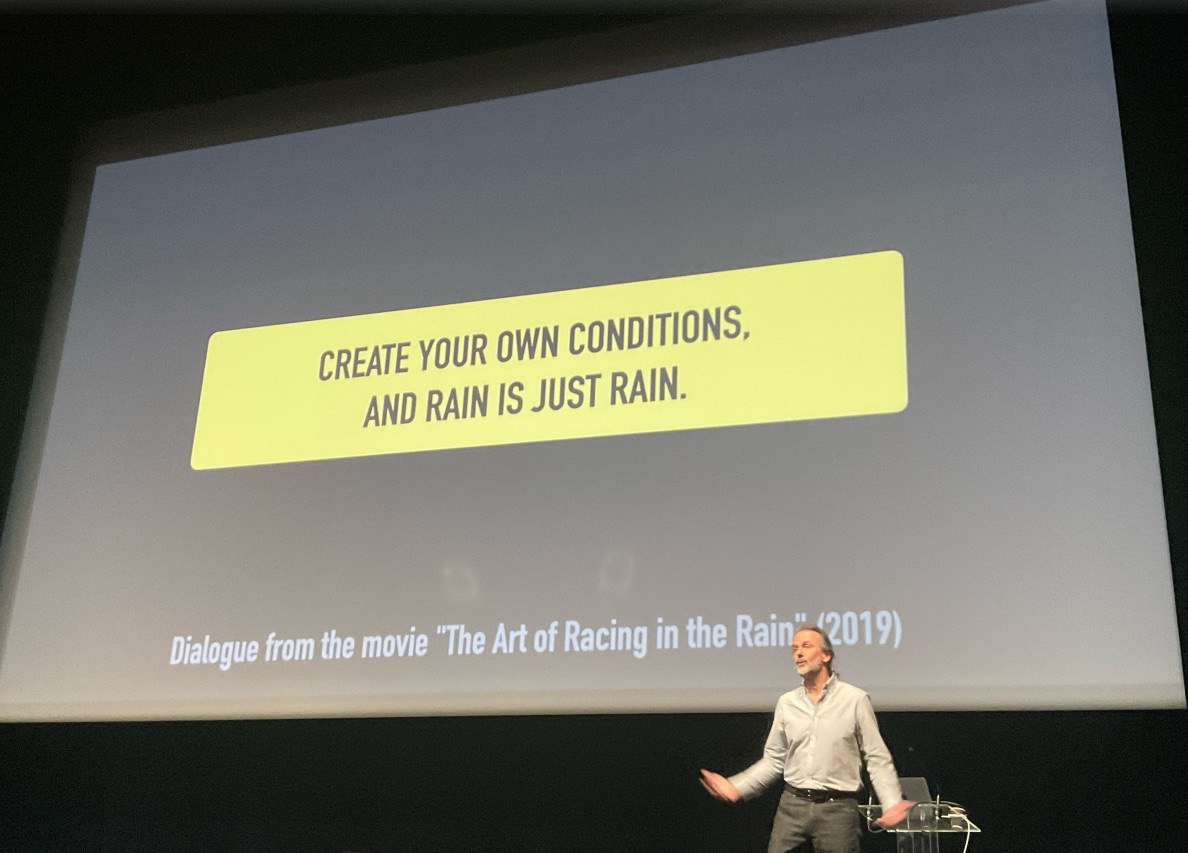
I also liked how practical his closing advice was. One of his final slides, drawing on The Art of Racing in the Rain, said it very well: create your own conditions, and rain is just rain. That’s one to remember in these hectic times.
Pierre Masai and Jidoka
Pierre Masai’s keynote on Jidōka in Lean Engineering was really amazing, and it also reminded me how little I really know about Lean. Or maybe more accurately: how much I still have to learn about it.
Learning more about Jidōka and Jikōtei kanketsu was especially valuable. Pierre used the language of “Built-in quality with ownership”, and I also liked the translation “creating a complete process that I own”. That’s a strong idea. I think a big factor in this is making sure people know when they did a good job.
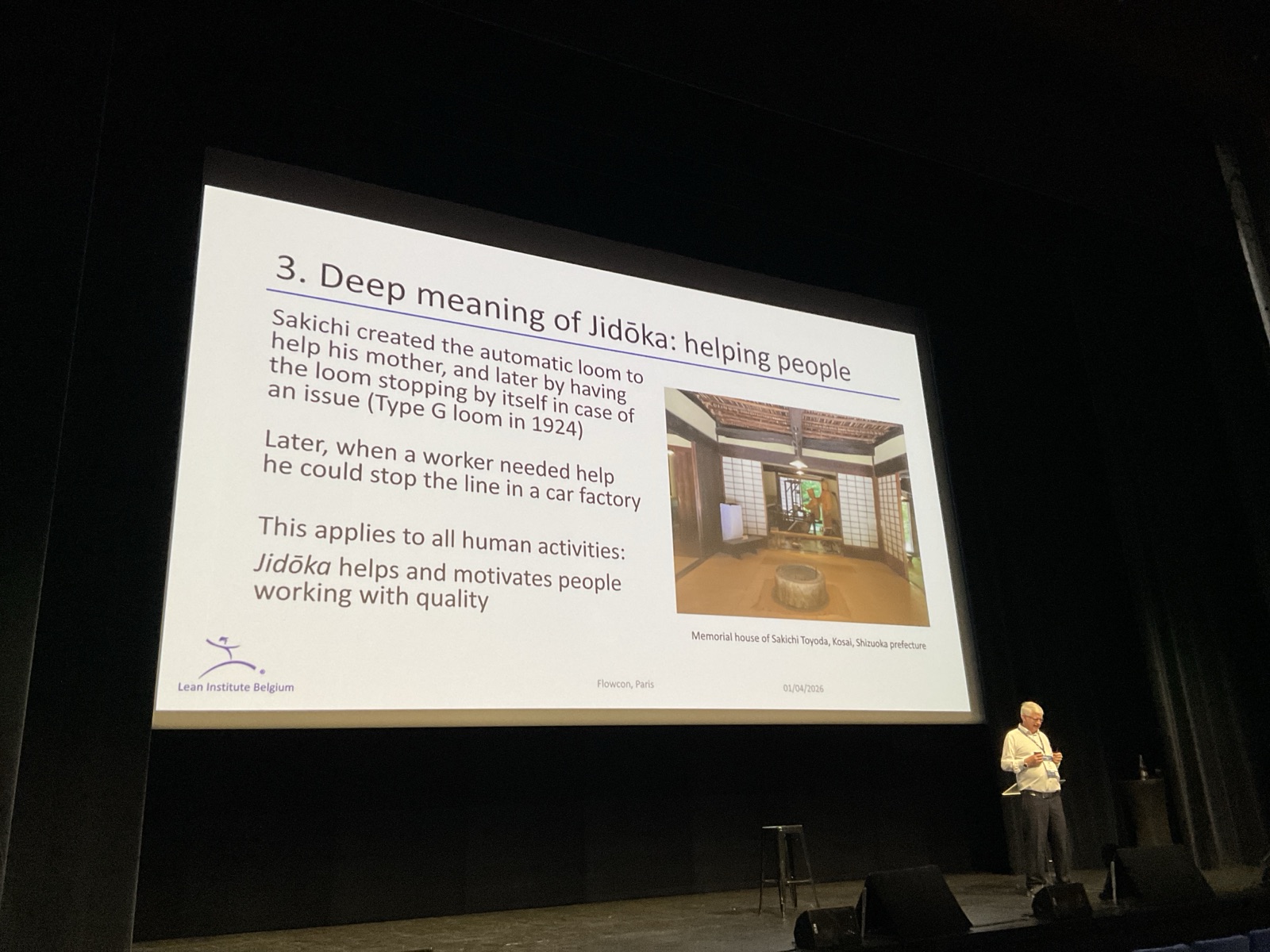
What I found inspiring is the emphasis on building quality into the work itself. Pierre’s slides make clear that Jikōtei kanketsu depends on good design, a good process, and a capable operator before work starts. That feels very different from the standardization tracks we sometimes go through, where the emphasis can drift toward extra controls and checklists instead of helping people build quality into the work itself.
Smaller items, shorter queues
Coming from a Product Management role, both of these talks caught my attention.
Daniel pointed out that we often spend a lot of time ordering backlogs, even though the ranking rarely matches the order things actually get done. My inner computer-science geek was delighted to hear someone talking about queuing theory and Monte Carlo simulations on a main stage. Two recommendations I always come back to:
- Never plan anything without a sense of how — and when — you want to land it. I’ve written more about that in Shaping Roadmap Items. In practice: give teams ownership of scope and keep the conversation on outcomes.
- Limit what you actually prioritize. Daniel says focus on what’s next. I usually look six to nine months out, knowing the view can shift. Either way: you’ll always have more work than capacity, so don’t burn time ranking everything.
This links nicely into Matt’s talk — which was a lot of fun.
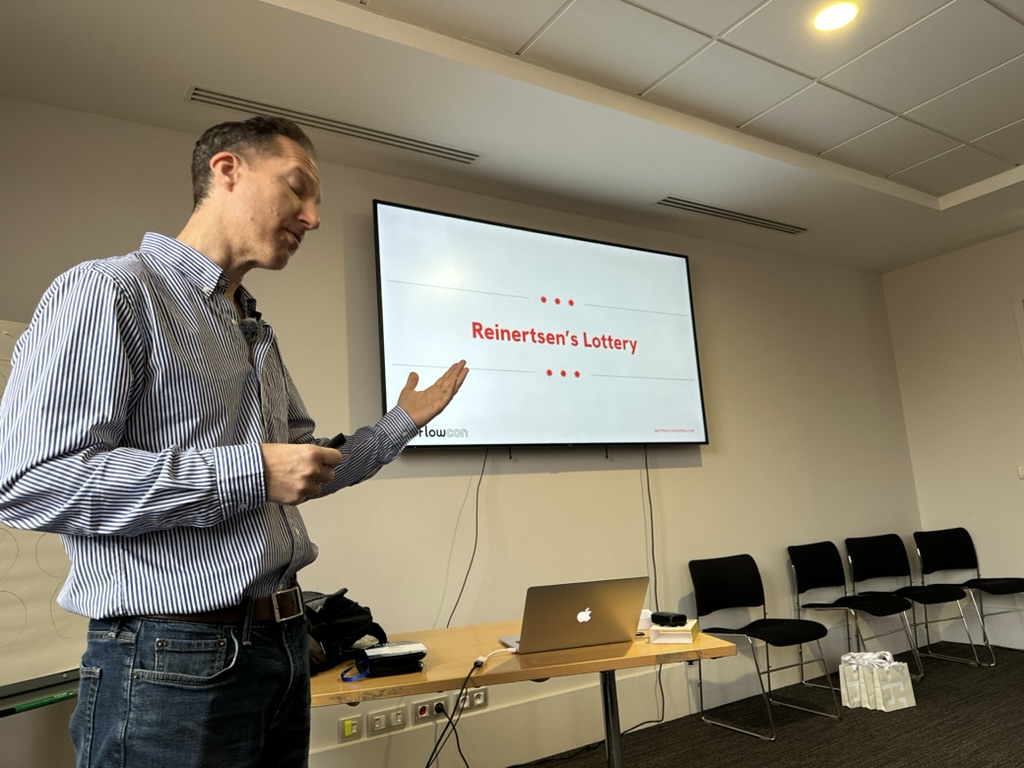
He opened with Reinertsen’s lottery to make the case for smaller items over big up-front commitments. People were playing with poker chips and buying lottery tickets, and there was so much energy in the room that I forgot to take pictures of that part. I like talks like this because they connect people not only to the work itself, but also to how we tackle the work. They help build a deeper shared understanding, and that does not need to come wrapped as dry theory.
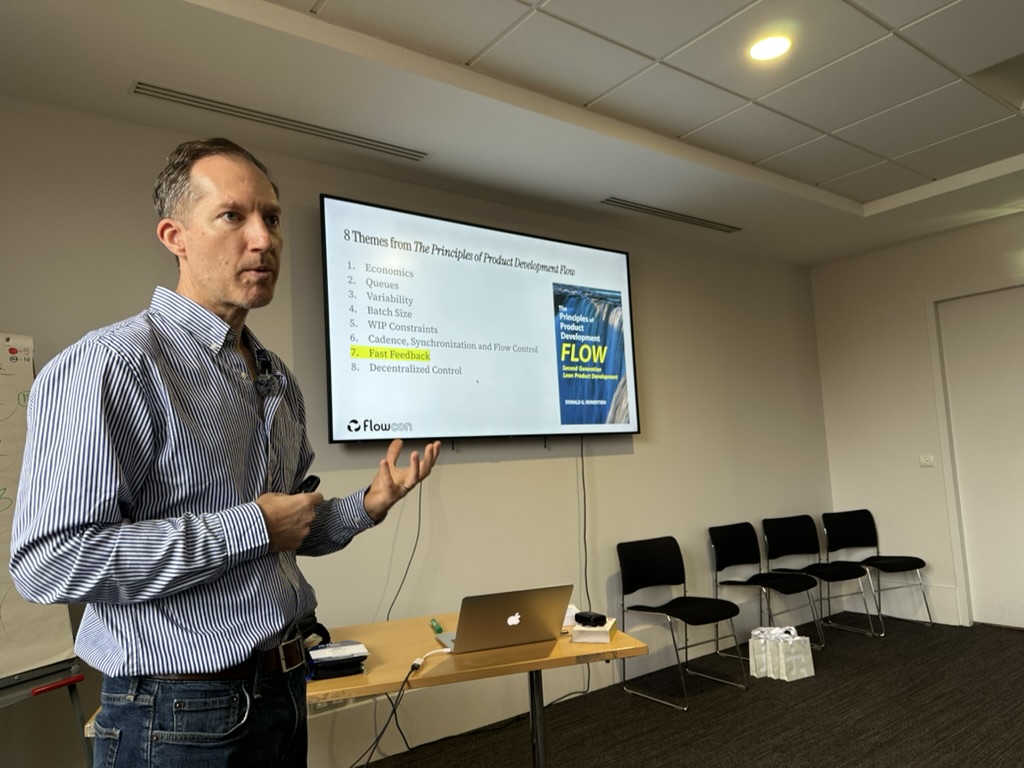
The talk grounded itself in Reinertsen’s eight themes from The Principles of Product Development Flow — economics, queues, variability, batch size, WIP constraints, cadence, fast feedback, and decentralised control — with Matt zooming in on fast feedback. His FlowCon slides are on his blog, share-alike licensed.
In practice, I work with POs to first name the appetite for something — expressed in sprints, but really an investment cost (what Chris Matts called investment duration). Only then do we sit with the team to see what fits inside that timebox to reach a specific outcome. It’s the same move as splitting an epic and committing only to the first slice — with the added benefit that the conversation grounds the bet in the actual work, which is what makes it land.
What stayed with me
What stayed with me most is that all of these talks kept pointing back to the same underlying question: how do we create better conditions for good decisions, good conversations, and good work?
AI makes that question more urgent, because it raises the pressure to act without removing the need for context and judgement. Wardley Maps help make the strategic conversation more concrete. Sociotechnical Architecture and Simon Rohrer’s framing both reinforce that good architecture does not come from isolated authority, but from ongoing interaction. Leadership matters because it shapes whether those conversations can happen at all.
That is also why the points on batch size, queues, and prioritization matter so much to me. Smaller items, shorter queues, and clearer bets are not just delivery mechanics. They are part of creating the conditions for learning, ownership, and fast feedback. And that, more than any single talk, is the thread I brought home from FlowCon.
Updates
- Expanded the Reinertsen's Lottery note to capture the interactive poker-chip exercise and the energy in the room.